 Excaloricate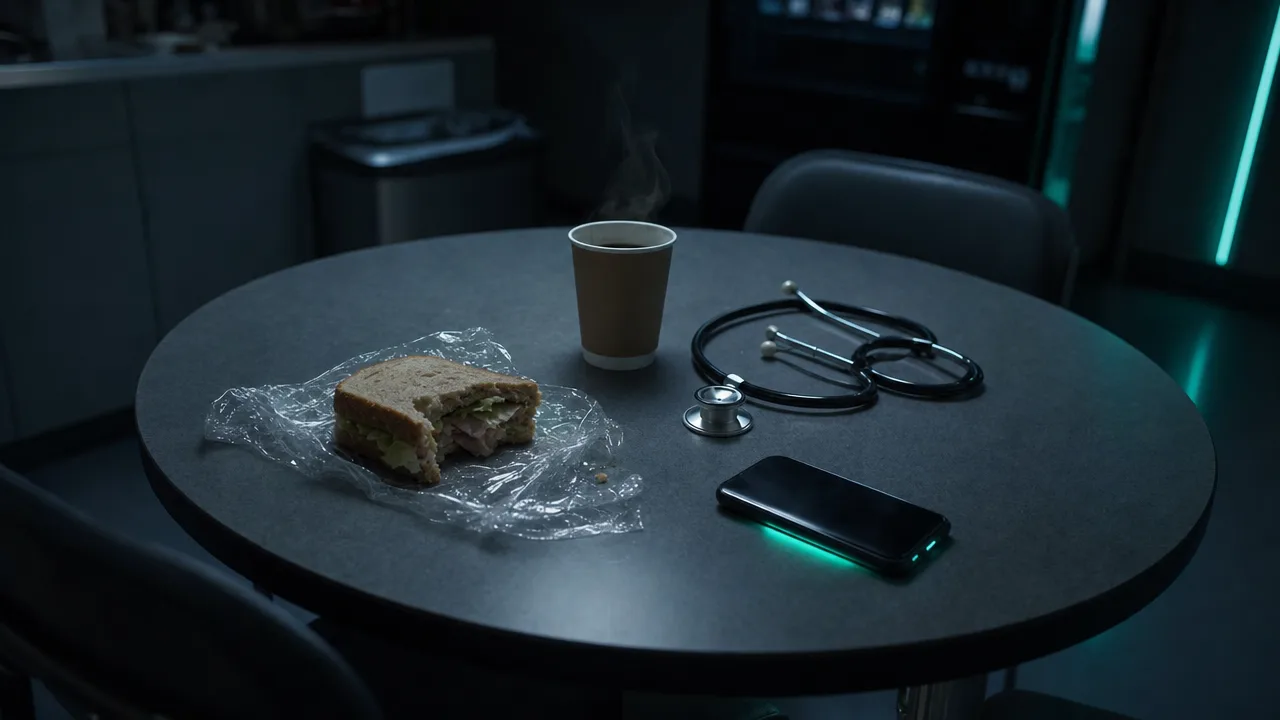
For three years, Aiko told herself the same thing every time a new tracking app came out: this isn't built for people like me. She was an ER nurse on a rotating rota — three nights on, two days off, a "day" that could start at 7 p.m. or 7 a.m. depending on the week.
Every app she tried assumed a normal life. Log breakfast, log lunch, log dinner. By Thursday she'd be standing in a hospital break room at 3 a.m. eating a vending-machine sandwich, with no idea which slot it belonged in. By Friday she'd given up.
She was 8 kg above where she wanted to be, and she'd been there for years.
The thing that wasn't working
It wasn't motivation. Aiko was the kind of person who could run a code on a crashing patient at 4 a.m. and still write up the chart cleanly. Discipline was not her problem.
The problem was that her "day" wasn't a day. It was a 24-hour block that could start at any clock time, and most of her eating happened in the half of that block that the rest of the world calls "night." On a night shift she'd eat:
- A real meal at 6 p.m. before leaving the apartment.
- A snack at 11 p.m. when the first wave finally slowed.
- A vending-machine something at 3 a.m. when she hit the wall.
- A "breakfast" at 8 a.m. on the way home that was really dinner.
- Nothing until late afternoon, when the cycle restarted.
Trying to assign that pattern to "breakfast / lunch / dinner" felt like translating a poem into a language that didn't have the words.
The shift
What changed wasn't a new app feature. It was a small reframe a colleague offered her during a 4 a.m. coffee:
"Your day starts when you wake up. Not at midnight. Your body doesn't care what the clock says."
Aiko started counting her day from the moment she got out of bed. If she woke up at 5 p.m., that was her morning. The 6 p.m. meal was breakfast. The 3 a.m. vending sandwich was lunch. The 8 a.m. drive-through was dinner. The clock stopped mattering. Only the order did.
The other shift: she stopped trying to log during her shift. There was no time. She'd snap a photo of whatever she was about to eat, drop her phone back in her scrub pocket, and log it in the morning when she got home. Five minutes, while the kettle boiled, before bed.
What the data showed her
After about three weeks of imperfect logging, a pattern fell out that she hadn't seen before. The 3 a.m. vending choice wasn't actually her biggest problem. The real damage was the post-shift "I deserve this" breakfast on the way home — a hash browns, sausage, egg combo that came in around 1,100 kcal. Once a week, fine. Four times a week, that was the 8 kg.
She didn't cut it out. She replaced it twice a week with a yogurt and banana she kept at home, eaten in bed. The other days she still got the hash browns. It wasn't a restriction. It was a swap she could live with on a Thursday after a brutal twelve hours.
Twelve months later
Aiko lost the 8 kg over about ten months, which is slower than most apps promise and faster than anything that had ever worked for her before. She didn't change jobs. She didn't add workouts. She didn't meal prep — she tried twice and threw the Tupperware out both times.
What she changed was this: her day starts when she wakes up. She logs once, at the end. And she knows which meal is the one that actually moves the number, so she can spend her willpower on that one and stop spending it on the other four.
If you've been telling yourself tracking just isn't built for shift workers, it might be worth testing the same reframe before you give up on it again.