 Excaloricate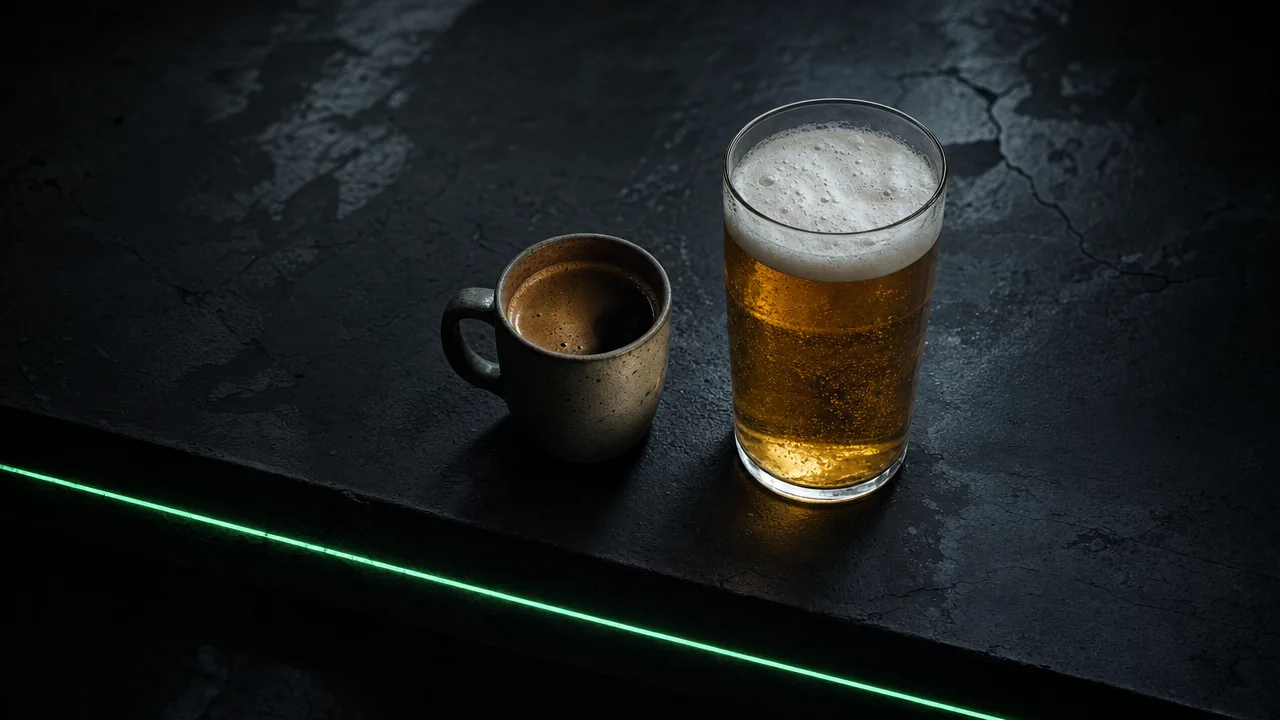
Most people who start tracking discover the same thing within a week: their food log is reasonably tight, and the numbers still don't add up. The math is usually hiding in their glass.
Liquid calories are easy to underestimate because drinks don't trigger the same "I just ate something" signal. A 600 kcal smoothie disappears in three minutes and leaves no plate behind. A pint of beer feels like nothing. Two flat whites on the way to work feel like one act, not 250 kcal.
This is a short guide to spotting them.
The four categories that matter
1. Coffee additions
Black coffee is basically zero. Everything you add isn't.
- Whole milk: ~9 kcal per tablespoon. A 12 oz latte lands around 150 kcal. A 16 oz one closer to 200.
- Oat milk: same ballpark as whole milk for the typical "barista" oat — about 120 kcal a cup.
- Almond milk (unsweetened): ~30 kcal a cup. Genuinely light.
- Syrups: ~20 kcal a pump. Two pumps in a latte is 40 kcal you never tasted as sugar.
- Whipped cream on top: ~50 kcal a swirl.
Two flat whites with whole milk = ~250 kcal before you've eaten breakfast.
2. Juice and smoothies
If it's drinkable, it's calorically dense by design — no fiber slowing you down. A 250 ml glass of orange juice is around 110 kcal. A 500 ml smoothie at a chain is usually 300–450 kcal even if it looks healthy.
The trap: smoothies are marketed as a meal replacement, but you'll be hungry again within an hour. Almost no protein, no chewing, and the body processes liquid sugar faster than it processes hunger signals.
3. Alcohol
Roughly:
- Beer (pint, 5%): 200–240 kcal
- Glass of wine (175 ml): 130–160 kcal
- Shot of spirit (40 ml): ~90 kcal, before mixers
- Sugary cocktails (margarita, mojito, espresso martini): 200–350 kcal each
Two beers and a glass of wine is a meal's worth of calories — and it comes with quietly reduced inhibitions about the snacks that follow.
4. Soda and "no-cal" decoys
Regular soda is the obvious one: about 140 kcal a can. The decoys are the drinks people pick when they're trying to be good — sweetened iced tea, kombucha (60–90 kcal a bottle), flavored sparkling water with juice, sports drinks. None of these are free.
Diet soda and zero drinks really are zero. If you're using them to crowd out 200 kcal alternatives, that's a win, not a compromise.
What to do when you don't know
You're rarely going to know the exact number, especially out of the house. A few shortcuts:
- Coffee shop drinks: trust the menu calorie count if it's posted. If not, assume 150 kcal for any milk-based drink under 12 oz, 250 kcal above.
- Restaurant cocktails: assume 250 kcal for anything that isn't a straight spirit + soda.
- Wine and beer: pick the number from the list above, multiply by how many you actually had — not how many you'll admit to.
- Smoothies: assume 350 kcal unless you made it and measured.
The point isn't to be exact. The point is to stop your drinks from being a silent slush fund of unlogged calories. Most people who fix only this lose weight without changing what they eat.