 Excaloricate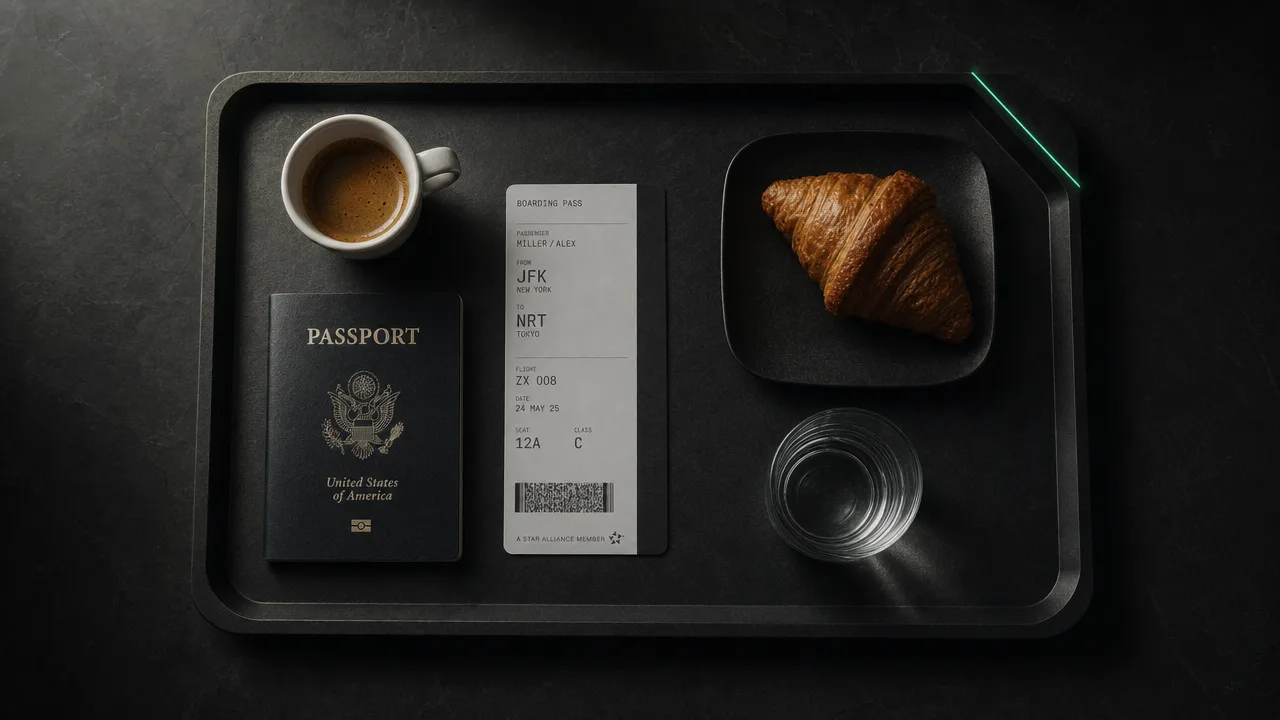
Sofia is a management consultant based in Madrid. For most of her thirties, she was flying somewhere on Monday morning and home on Thursday night. Client offices, hotel breakfasts, airport gates, late team dinners. She had tried four serious weight-loss attempts between 2019 and 2024 — each one died at the first business trip.
By the time she started over in 2024, she weighed 78 kg. Not catastrophic. But every photo from the previous five years told her the same story: a body slowly drifting away from one she recognized.
The trips she blamed
When she explained the problem to friends, the script was always the same. "I can do it for two weeks at home. Then I'm in Frankfurt, and the only thing open after the workshop is a hotel restaurant menu with three salads and twelve heavier mains. What am I supposed to do."
It sounded reasonable. It also wasn't quite true.
When she went back and listed her actual high-calorie days, what jumped out wasn't dinners. It was:
- Hotel breakfasts she treated as free because they were included
- Pastries at the airport, because she'd been awake since 5 a.m.
- Wine at client dinners, every night, because the client was drinking
- "Just one" co-worker snack on the flight home
Each one alone was small. Stacked across a four-day trip, they were the entire problem.
What she changed first
She didn't redesign her diet. She didn't bring meal-prepped chicken in a Tupperware to Düsseldorf. The thing she actually changed was this: she committed to logging every single thing she ate, even when she didn't know the number.
Croissant at gate B17, 6:40 a.m. — log it. Best guess. Move on.
That was the whole rule. No accuracy goal. No daily budget on travel days. Just: nothing goes uncounted.
The week I stopped pretending I'd start tracking again on Monday was the week the weight started moving.
Two things happened. First, the logging itself made the airport pastry less automatic — once you have to type it in, you sometimes notice you weren't actually hungry. Second, she had real data. By the end of month one she could see that her trip days were averaging about 700 calories above her at-home days. Not 2,000. Not a catastrophe. A number she could attack.
The actual playbook she settled on
After a few months of this, a small set of rules emerged. Nothing dramatic.
- Hotel breakfast: eggs, fruit, coffee. Skip the pastry display unless that's the meal she's chosen for the day.
- Airport: bring her own snack from home — almonds, a piece of fruit, a protein bar. Bought-at-the-gate food is for emergencies, not defaults.
- Client dinners: order whatever she wants. One glass of wine, not three. Bread basket stays on the other side of the table.
- Flight home: nothing. She's home in three hours and can eat there.
None of these rules are heroic. The point is that each one is a decision she made once, sitting at her kitchen table, instead of at a Lufthansa gate at half past five in the morning.
What it added up to
11 kg over fourteen months. Three trips a month on average through that period. By her own description it was the lowest-stress fourteen months of food she'd had in years, because she was no longer in a permanent negotiation with herself about whether "this trip counts."
The body she has now is the same body. The travel hasn't changed. What changed was that she stopped treating her work life as a parenthesis around the diet, and started treating it as the diet.