 Excaloricate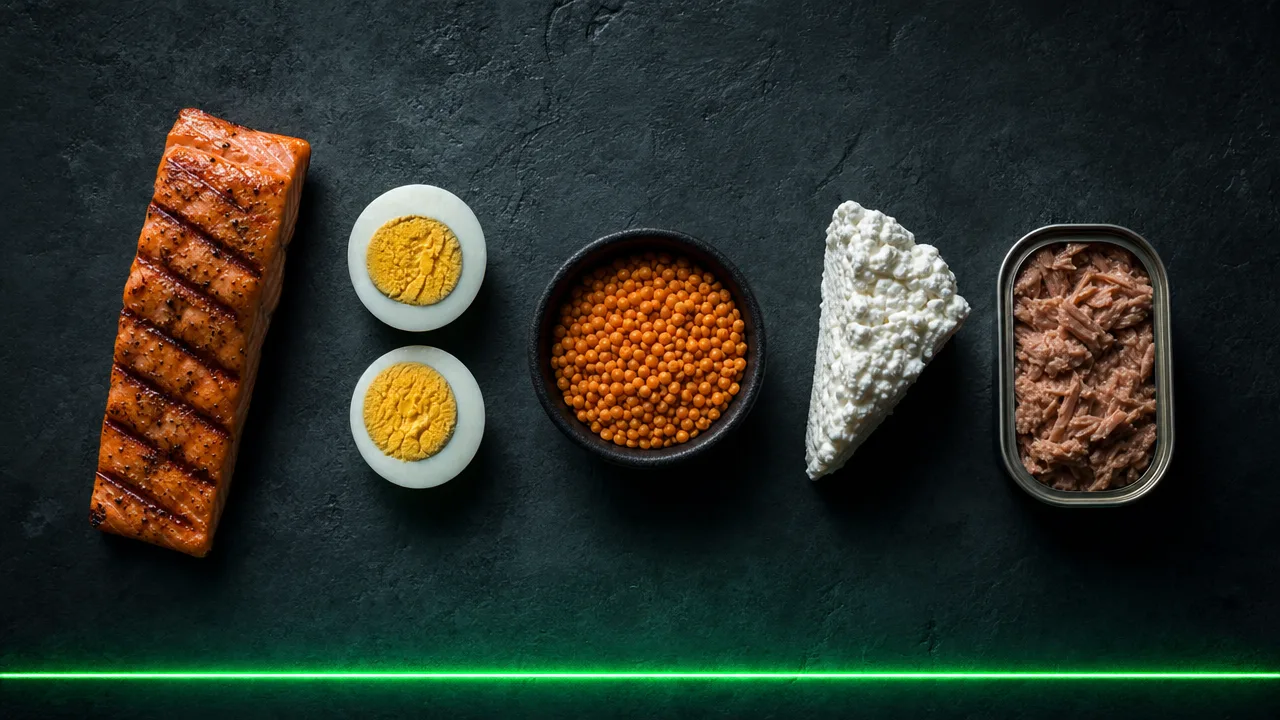
Most people guess wildly when it comes to protein. Either they assume they're getting enough because they eat meat at dinner, or they panic-buy a tub of whey because some influencer said they need 200 grams a day. Both are usually wrong, and both make tracking harder than it has to be.
Here's a saner starting point.
The number, in one sentence
If you're trying to lose fat while keeping muscle, aim for roughly 1.6 grams of protein per kilogram of bodyweight per day — or about 0.7 grams per pound. A 70 kg adult lands somewhere near 110–120 grams. That's the range most strength and nutrition research converges on for active adults who want to look and feel like they trained, not just dieted.
If you're sedentary and just maintaining, you can drop to ~1.2 g/kg without trouble. If you're bulking or training hard six days a week, going up to 2.0 g/kg is fine but rarely necessary.
Calories still come first. If you're eating in a surplus, hitting your protein number won't keep you lean. If you're eating in a deficit, hitting it is what keeps the weight loss from coming out of your muscles.
Why the number matters more in a deficit
When you're below maintenance calories, your body looks at every tissue and asks "do I need this?" Muscle is expensive to keep around. Without enough protein, and without a reason to use the muscle, your body happily breaks it down for fuel.
Two things protect against that:
- Eating enough protein.
- Giving your muscles a reason to stay — usually some form of resistance training, even just bodyweight.
If you do both, most of what you lose is fat. If you do neither, the scale moves but your body composition gets worse.
Easy ways to hit the number
Most people are short by 20–40 grams. You don't need to overhaul your diet — you need three or four cheap habits.
- Anchor breakfast with protein, not just carbs. Eggs, Greek yogurt, cottage cheese, leftover chicken. Pastries and toast alone leave you 25–30 g behind before noon.
- Pick the higher-protein version of things you already eat. Greek yogurt instead of regular. Skyr instead of pudding. Higher-protein pasta. Cottage cheese instead of cream cheese. These cost almost nothing to swap.
- Treat legumes as a real protein source, not a side. A cup of lentils is ~18 g. Black beans, chickpeas, edamame all stack up fast and are cheap per gram.
- Use a protein topper at dinner. A tin of tuna, a soft-boiled egg, a handful of shredded chicken on top of whatever you already cooked. Adds 15–25 g without you having to cook a separate meal.
Powders are fine, not required. They're a tool for people who can't fit another solid meal in — usually because of training timing or appetite suppression on a diet. If you can hit your number with food, do that. It's cheaper and more filling.
What to log
You don't need to track protein to the gram. Log your meals as you normally would and check the daily total once or twice a week. If you're chronically under, swap one meal's protein source. If you're consistently in range, stop thinking about it.
The point isn't precision. The point is making sure the deficit you're running takes from fat, not from the muscle you spent years building.