 Excaloricate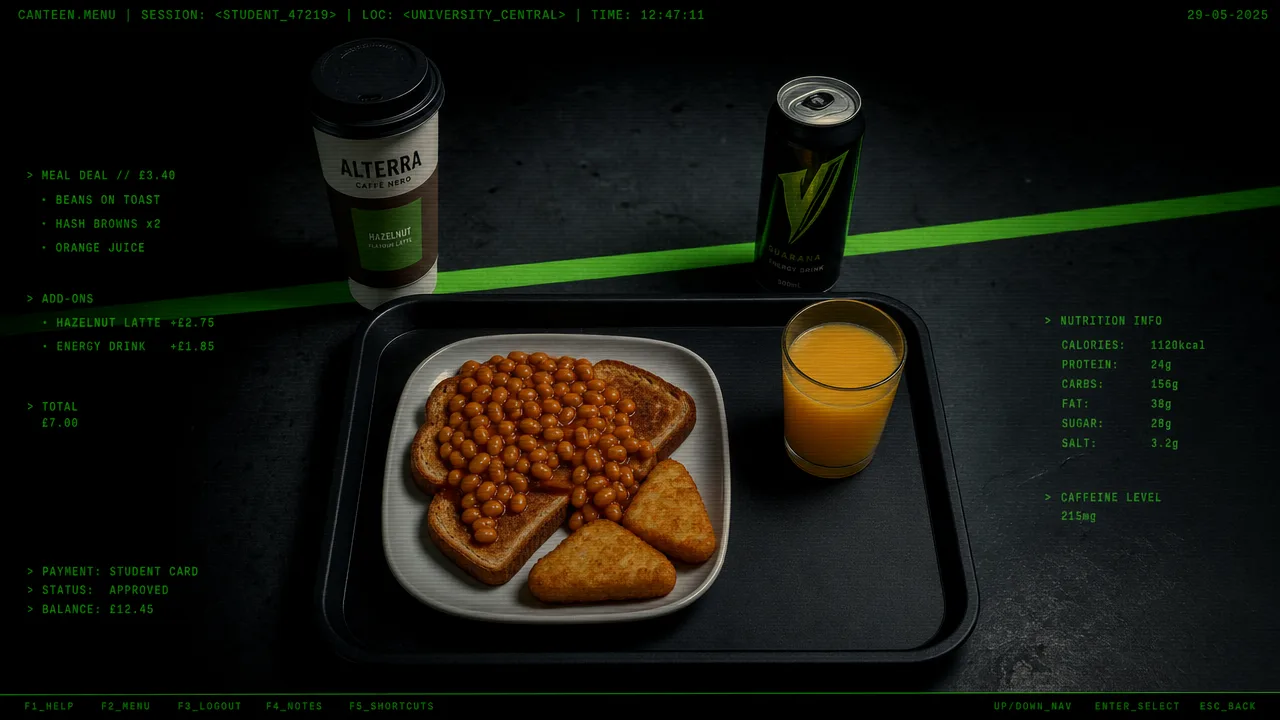
Priya was in her final year of a biology degree in Manchester when she decided she was done flinching at photos of herself. Three years of halls, a prepaid dining-hall meal plan, and a student loan that didn't stretch to anything fancy had quietly added 11 kg since she'd arrived as a fresher.
Every plan she found online seemed written for someone else. Meal-prep six chicken breasts on a Sunday — in a shared kitchen with one working hob and a microwave. Shop the perimeter of the supermarket — on £30 a week, on top of the meal plan she'd already paid for. Track your macros — she didn't cook a single thing she ate, so she had no idea what was in any of it.
The plan she'd already paid for
Here's the part that made her feel stuck. The dining hall was prepaid for the whole term. Skipping it to "eat clean" meant paying twice: once for the plan, once for the food she actually ate. For a student, that wasn't a detail. It was the entire budget.
So she'd half-decided that weight loss was something for later — once she had a proper kitchen and a real salary. Final year, dissertation, a part-time job in a café. Not now.
What she actually changed
She didn't quit the meal plan. She didn't buy anything new. The single thing she changed was that she started logging everything she ate, dining-hall tray included, even when she had no idea of the number.
Beans on toast, two hash browns, a glass of orange juice — log it, best guess, move on.
The rule was just that nothing went uncounted. No calorie budget the first week, no targets. She only wanted to see the shape of an ordinary day.
I assumed the dining hall was the problem. It turned out to be the most sensible part of my day.
What the log actually showed
The hot meals weren't the issue. What stacked up was everything around the edges:
- A large flavoured latte on the walk to the library — most days, two
- Energy drinks during late revision, filed under "just caffeine"
- The vending machine at 11 p.m., because dinner had been at six
- "I've earned this" snacks after every handed-in assignment, and there was always an assignment
None of it felt like eating. It was sipping and nibbling around studying. Stacked up, it was roughly 600–800 calories a day she'd never have named if you'd asked her what she ate.
The version that fit a student's life
Once she could see it, the fixes were cheap by design:
- Dining hall: protein and vegetables first, fill the plate there, then decide on the rest. The food was already paid for — she just chose differently within it.
- Coffee: one proper one a day, the rest black or tea. That alone saved both money and a few hundred calories.
- Late nights: one planned snack she actually liked, kept in her room, instead of whatever the vending machine offered.
- Sleep: the hard truth that most of the 11 p.m. snacking was tiredness, not hunger.
What it added up to
9 kg across a single academic year, finished around the same week as her dissertation. It cost her nothing extra — a little less, in fact, once the daily latte habit shrank.
What she tells friends now is that she never needed a kitchen or a bigger budget. She needed to see the day she was already living. The dining hall was never the problem. The blank spots between meals were.