 Excaloricate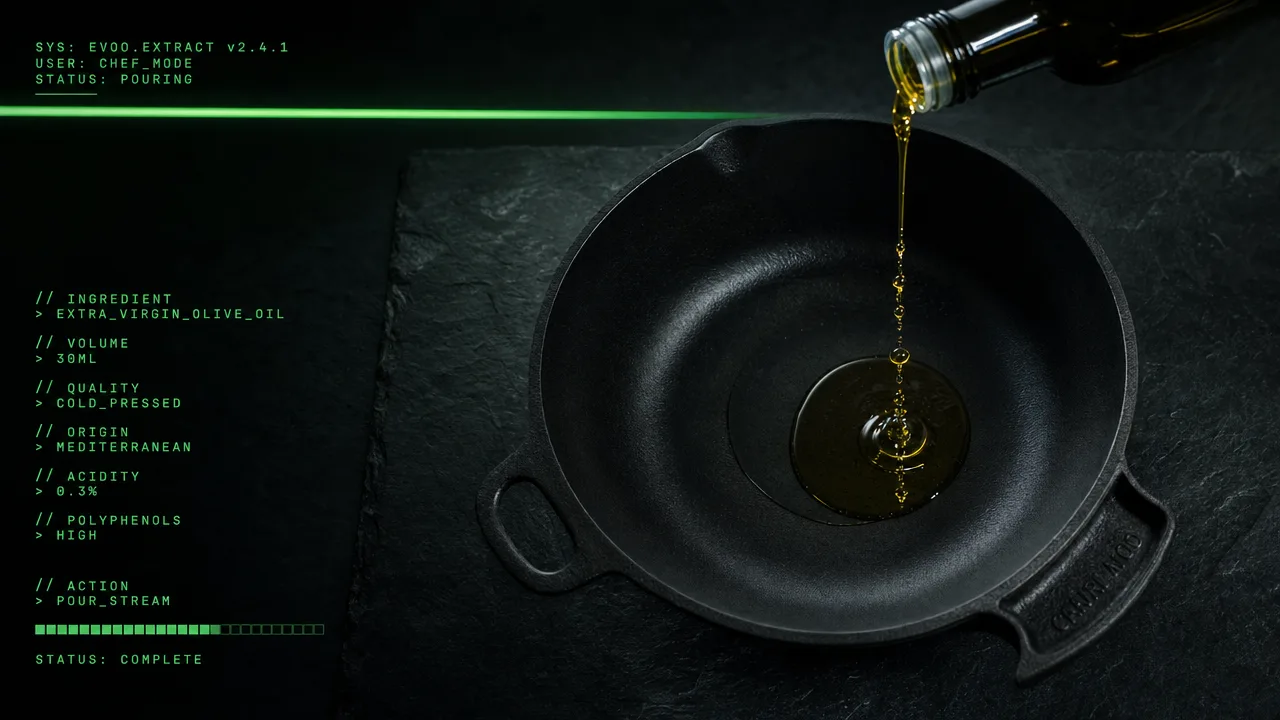
Two people can eat the exact same chicken breast and the exact same salad, and one of them is eating 300 calories more than the other. The difference isn't the food on the plate. It's the tablespoon of oil in the pan, the drizzle of dressing on the leaves, and the spoon of sauce nobody bothered to count.
Cooking fats and sauces are the single most underestimated source of calories in home cooking. They're invisible once they're on the food, they pour fast, and almost nobody logs them. Here's how to stop them from quietly wrecking an otherwise careful day.
Why fat is the sneaky one
Fat carries more than twice the calories of protein or carbs — about 9 calories per gram versus 4. That makes it the most calorie-dense thing in your kitchen by a wide margin, and it happens to be the thing you add by eye, straight from a bottle, without measuring.
A "light glug" of olive oil into a hot pan is rarely one teaspoon. It's usually closer to two tablespoons.
One tablespoon of any oil — olive, vegetable, coconut, butter — is about 120 calories. The number barely changes between them. "Healthy" oil is still 120 calories a spoon.
So the oil you cooked your vegetables in can easily out-calorie the vegetables themselves. That's the trap: you log the visible food and skip the fat that's actually moving your total.
The worst offenders, ranked
These are the ones people forget the most, roughly worst to least:
- Oil for frying or roasting — 2 tablespoons is normal for a pan of veg, and that's ~240 calories you almost never log.
- Salad dressing — 2 tablespoons of a creamy or oil-based dressing is 150–200 calories. The salad underneath might be 40.
- Butter — a pat on toast, a knob in the pan, a finish on the steak. Each is 50–100 calories and they stack up across a day.
- Cream and cheese sauces — a quarter cup of cream sauce can be 200+ calories before the pasta it's coating.
- "Healthy" toppings — nut butter, pesto, tahini, mayo. All wonderful, all 90–100 calories a tablespoon.
How to estimate without weighing
You don't need to put oil on a scale. You need a habit of counting the pours you'd otherwise ignore.
- Count spoons as you cook. Every tablespoon of oil or butter that goes in the pan is ~100–120 calories. Just keep a running tally in your head and log it.
- Halve what you didn't measure. If you free-poured oil into a pan and ate half of what you cooked, you still ate half the oil. Don't let "I didn't eat all of it" delete the fat.
- Dressing on the side. Order it separate, dip your fork, and you'll use a fraction of what the kitchen would have poured — and you'll actually know roughly how much.
Just describe it — including the fat
This is where describing your meal beats hunting a database. A database entry for "grilled chicken salad" has no idea how much oil your pan held or how heavy your hand was with the dressing. You do.
So when you log it, say the fat out loud: "chicken breast pan-fried in a tablespoon of oil, salad with two tablespoons of ranch." That one extra clause is often the difference between an estimate that's right and one that's 250 calories light.
The one habit that fixes it
Pick the single fat you use most — for most people it's cooking oil — and start logging it every single time for one week. Don't change how you cook. Just count it. Most people are genuinely surprised: the fat they never logged was the 200–400 calories standing between them and the deficit they thought they already had. Once you can see it, you can decide what to do about it. Until then, it's just the gap between the food you ate and the food you counted.