 Excaloricate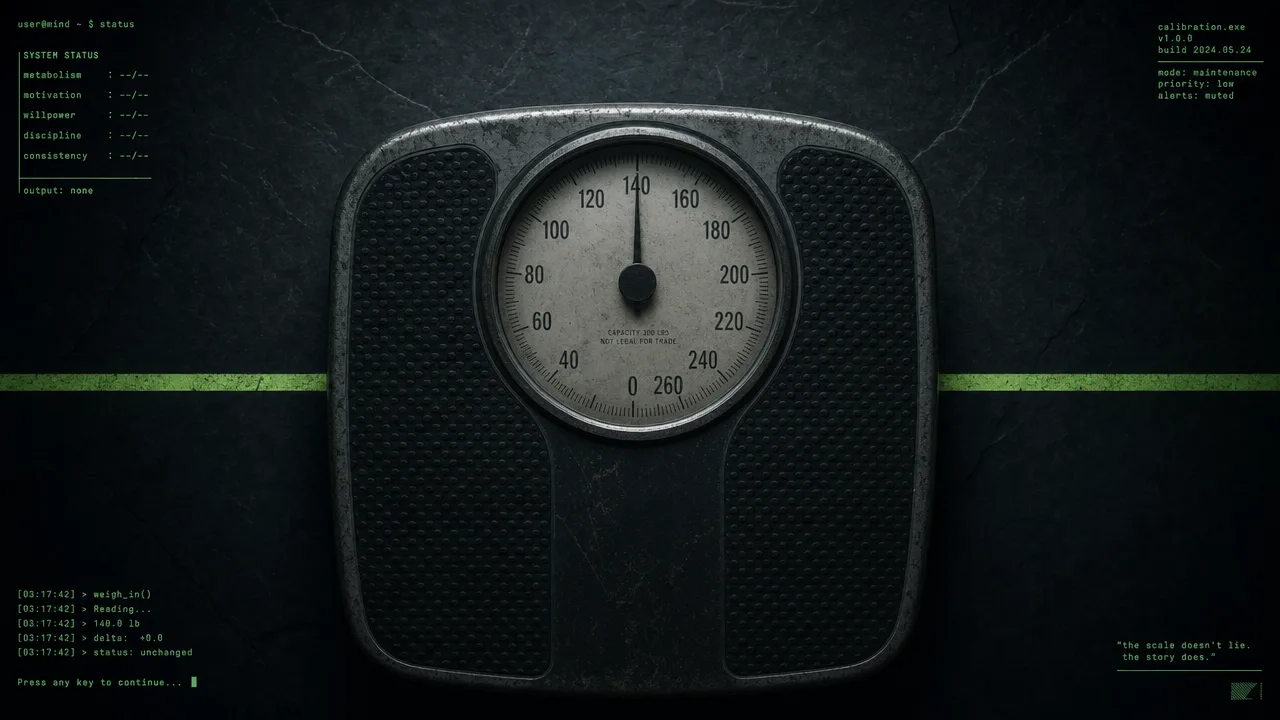
Few things are as discouraging as the scale freezing in place after weeks of steady progress. You're eating the way that worked a month ago, but the number won't budge. The good news: a plateau is almost never a sign that your body is "broken." It's a predictable stage, and there are a handful of reliable levers to get moving again.
Why plateaus happen
When you lose weight, you become a smaller person — and a smaller body burns fewer calories. The deficit that melted off the first few kilos slowly shrinks until it disappears. A few things stack up:
- Lower maintenance calories. Less mass means less energy needed to move and maintain it.
- Adaptive changes. Diet for a while and your body quietly becomes more efficient; you also tend to fidget and move a little less.
- Portion creep. The most common culprit. Servings drift larger, "just a bite" becomes a habit, and the deficit erodes without you noticing.
Most stalls are a mix of all three — and only the last one is fully in your control.
First, make sure it's a real plateau
The scale is noisy. A few flat days is not a plateau — water, sodium, hormones, and digestion can hide fat loss for a week or more.
A true plateau is three to four weeks with no downward trend, judged on a weekly average rather than any single morning.
If it's been less than that, the fix is patience, not panic. Look at the line over weeks, not the number this morning.
Tighten your logging
Before changing anything you eat, check what you're actually eating. People routinely underestimate their intake by 20–50%, and the gap tends to widen the longer they've been tracking.
- Weigh and log the things you've started eyeballing — oils, nut butters, cheese, dressings.
- Don't forget bites, tastes, and the leftovers off someone else's plate.
- Log weekends with the same honesty as weekdays. Two loose days can quietly erase five tight ones.
Surprisingly often, the plateau resolves right here, with no change to your target at all.
Then adjust one lever
If your logging is genuinely tight and the trend is truly flat for a month, pick one change:
- Recalculate your target. Plug your new, lower weight into a calorie calculator. You may simply need 100–200 fewer calories than you did several kilos ago.
- Add movement, not restriction. A daily walk burns calories without spiking hunger the way hard cardio can.
- Protect protein and sleep. Both preserve muscle and blunt appetite, which makes a smaller deficit feel sustainable.
Change one thing, then give it two to three weeks before judging it. Stacking five changes at once leaves you with no idea which one worked.
Consider a planned break
If you've been dieting hard for months, a maintenance break — eating at your new maintenance level for one to two weeks — can ease the hormonal and mental fatigue that feeds a stall. You won't regain fat eating at maintenance, and many people find the weight comes off more easily afterward.
A plateau isn't failure. It's feedback. Tighten the data, change one variable at a time, and the trend almost always picks back up.