 Excaloricate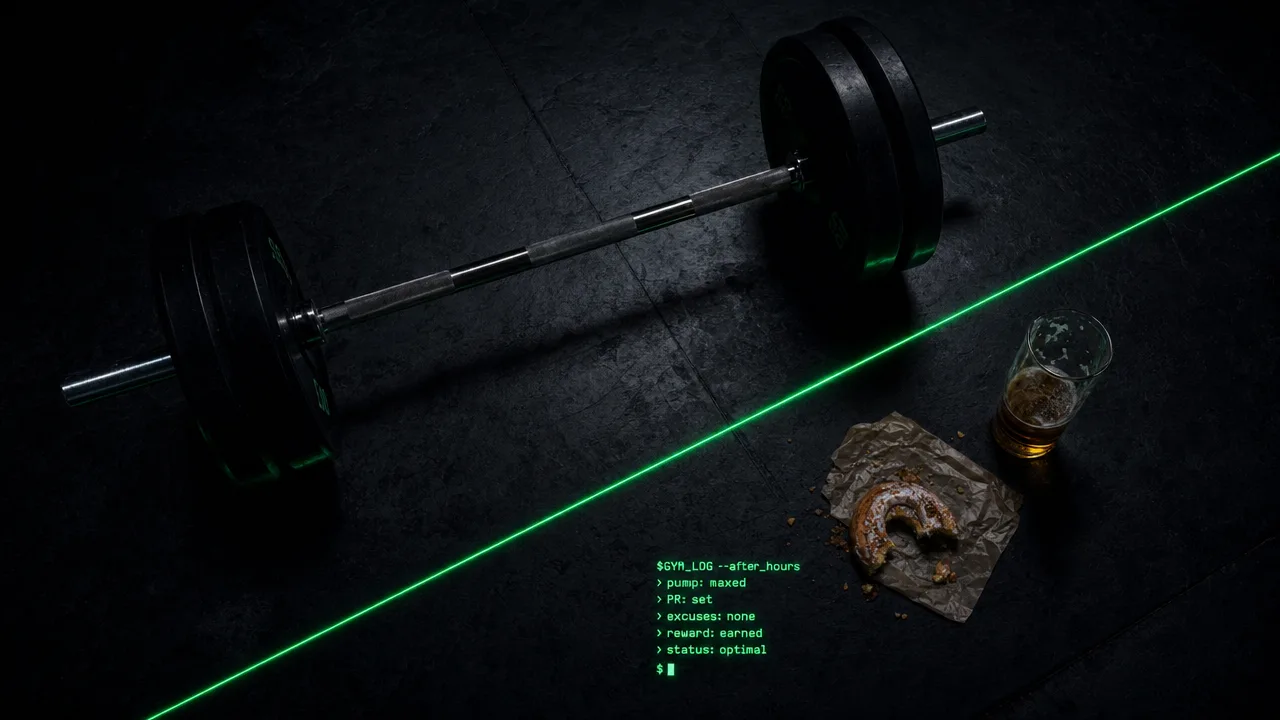
Theo had the gym dialed in. Five mornings a week, before work, he was under a barbell or pulling on a rowing machine. He'd been at it for three years. His deadlift looked great. His waistband didn't.
"I genuinely thought I had it handled," he says. "I was the most consistent guy in my friend group. So why was I still soft around the middle?"
The math he was avoiding
Theo, 31, writes software for a living. That means a chair for nine hours a day, then a hard hour in the gym, then back to the chair. In his head, the gym hour cancelled everything else out. A tough session felt like it had bought him the rest of the day.
The numbers don't work that way. A genuinely hard 60-minute workout might burn 400–600 calories. A post-gym pastry, a "I earned this" burrito at lunch, and a couple of beers while watching the game can put back two or three times that — easily, and without feeling like much.
"I was treating exercise like a credit card I never had to pay off," Theo says. "Turns out the bill was right there on my stomach."
What logging actually showed him
He'd resisted tracking for years because it felt obsessive. What finally got him to try was the opposite of obsessive: he just wanted to see a normal week, no changes, no rules.
He photographed and described what he ate for seven days and didn't restrict anything. The total was the part that stung. He was averaging close to 3,100 calories a day — a few hundred above what someone his size, even training hard, needs to hold weight steady. Not a disaster. But repeated every day for three years, it explained the waistband perfectly.
The biggest offenders weren't meals. They were the things that didn't register as eating:
- Post-workout "refuel" he didn't need — a smoothie and a bar, ~550 calories, on top of breakfast.
- Liquid calories — two craft beers most evenings, plus oat-milk lattes. Easily 500 a day, invisible.
- Handfuls — trail mix at his desk, a few of his kid's fries, nuts while cooking. None of it a meal; all of it real.
What he changed (and what he didn't)
He didn't touch the gym. He liked it, it was good for him, and it stayed exactly as it was. The deficit had to come from the eating, because that's where the surplus was.
He cut the automatic post-workout refuel — he was about to eat breakfast anyway. He moved beers to weekends only. He kept logging, not forever, but long enough to learn what a 2,400-calorie day actually looked like for him. After a month he could mostly eyeball it.
Eleven kilograms came off over about seven months. His lifts didn't suffer; a couple of them went up, because he was finally lean enough to see the work he'd been doing all along.
"The gym was never the problem," he says. "It was the story I told myself about what the gym let me eat. Once I could see the real number, I stopped lying to myself by accident."