 Excaloricate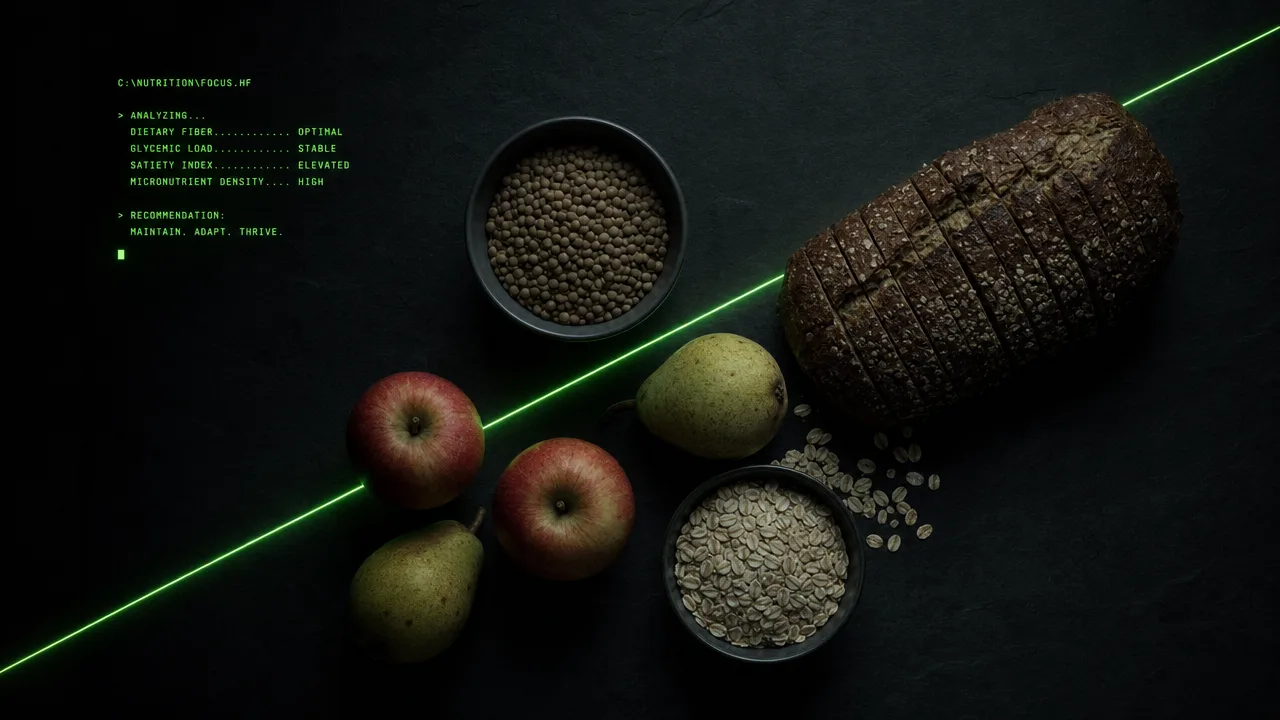
Protein gets all the attention. Fiber gets none — and that's a shame, because fiber is one of the few things that makes a calorie deficit feel less like a deficit. It fills you up, slows digestion, steadies your energy, and keeps you regular when you start eating less. If you're hungry all the time on a diet, there's a decent chance you're just not eating enough of it.
Here's the practical version.
The number, in one sentence
Aim for roughly 25–35 grams of fiber a day — about 14 grams per 1,000 calories you eat. Most adults get barely half that, often under 15 grams. You don't need to count it to the gram, but it helps to know that most people are running at a deficit they've never noticed.
You can't really overshoot by accident with whole foods. The only time fiber backfires is if you jump from 12 grams to 40 overnight — your gut needs a week or two to adjust. Ramp up gradually and drink more water as you do.
Why it matters more in a deficit
When you cut calories, the hardest part isn't the math — it's the hunger. Fiber is your cheapest defense.
- It adds volume without calories. A big bowl of vegetables, beans, or fruit physically fills your stomach for very few calories, and a full stomach sends "stop eating" signals to your brain.
- It slows everything down. Fiber blunts how fast sugar hits your bloodstream, which means fewer energy crashes and fewer cravings an hour after a meal.
- It keeps digestion moving. Eating less food often means less of it coming out the other end. More fiber prevents the constipation that makes people think the diet "isn't working."
None of this overrides calories — you still have to be in a deficit to lose fat. But fiber is what makes that deficit survivable.
Easy ways to hit the number
You don't need a supplement. You need a few defaults.
- Leave the skins on. Apples, pears, potatoes, cucumbers. Most of the fiber lives in or just under the skin, and peeling throws it away.
- Make beans and lentils a habit, not an occasion. A cup of lentils is ~15 grams — half your day in one ladle. They're cheap, freeze well, and stretch any meal.
- Pick the whole-grain version. Oats instead of sugary cereal, whole-grain bread instead of white, brown rice or barley instead of plain white rice. The swap is invisible in most dishes.
- Add a vegetable to a meal that doesn't have one. A handful of spinach in the eggs, frozen peas in the pasta, a side of broccoli. Frozen counts — it's just as good as fresh and never goes off.
- Snack on fruit, nuts, or popcorn. Air-popped popcorn is a surprisingly high-fiber, low-calorie snack. Berries and a small handful of almonds beat almost anything from a wrapper.
What to log
You don't need to track fiber daily. Log your meals as usual and glance at the fiber total once or twice a week. If you're consistently under 20 grams, add beans to one meal or swap one refined grain for a whole one — that single change usually closes most of the gap.
The goal isn't a perfect number. It's making your deficit feel less like one, so you actually stick with it long enough for the scale to move.