 Excaloricate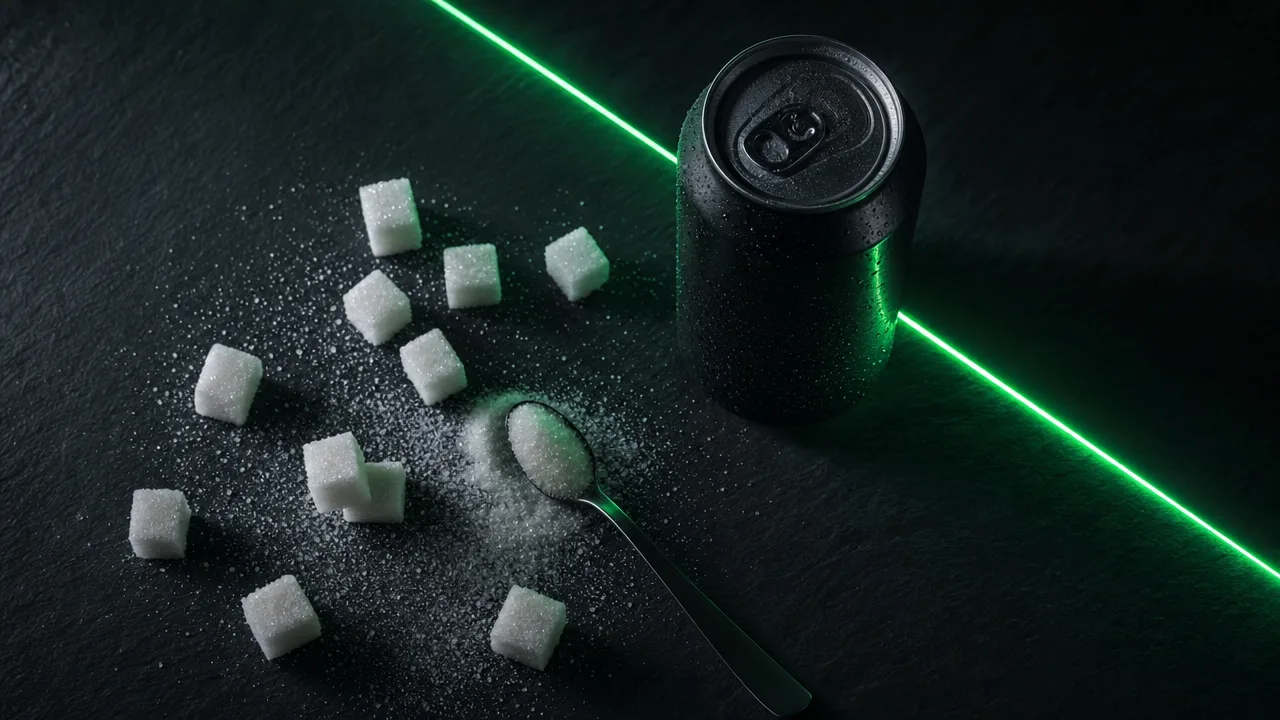
Sugar gets treated like a villain, and that's not quite right. The sugar in an apple or a glass of milk comes wrapped in fiber, water, and protein that slow it down and fill you up. The problem is added sugar — the kind stirred into food by a manufacturer or a barista, stripped of everything that used to come with it. It's the easiest place to spend calories without noticing, and most people are spending far more than they think.
Here's the practical version.
The number, in one sentence
Keep added sugar under about 25–35 grams a day — roughly 6 to 9 teaspoons. That's the ceiling, not a target; less is fine. The average adult eats nearly double that, most of it from drinks and packaged food they'd never describe as "sweet."
For scale: one can of regular soda is about 39 grams — your whole day in a single drink. A flavored yogurt can hold 20. A "healthy" granola bar, 12. None of these feel like dessert, which is exactly the problem.
Why it matters in a deficit
Added sugar isn't uniquely fattening — a calorie is a calorie. But it works against you in two specific ways when you're trying to eat less.
- It's calories without a brake. Whole foods come with fiber and protein that tell your brain to stop. Sugar dissolved in a drink doesn't. You can swallow 200 calories of soda in a minute and feel exactly as hungry afterward.
- It rents space you need for food. If 300 of your calories are going to sweetened coffee and a snack bar, that's 300 you can't spend on the protein and vegetables that actually keep you full. The deficit gets harder for no payoff.
You don't have to fear sugar. You just want it to earn its place instead of leaking in unnoticed.
Where it hides
The dessert you can see is rarely the problem. The sugar that wrecks a day is the kind you don't register:
- Drinks. Soda, juice, sweetened coffee, energy drinks, kombucha, flavored milk. This is the single biggest source for most people, and liquid calories barely dent your hunger.
- "Healthy" foods. Flavored yogurt, granola, protein bars, smoothies, instant oatmeal, dried fruit. Marketed as virtuous, often as sweet as candy.
- Savory stuff. Pasta sauce, ketchup, barbecue sauce, salad dressing, bread, "lightly sweetened" anything. You'd never guess, which is why it adds up.
How to actually cut it
You don't need to quit sugar. You need a few defaults that close the biggest gaps.
- Fix your drinks first. This one change usually does more than everything else combined. Switch to water, sparkling water, black coffee, or unsweetened tea. Diet versions are fine if they help you make the jump.
- Read one number on the label. Look for "added sugars" in grams. Four grams is a teaspoon — that's your quick mental conversion. If a daily food is in double digits, find a swap.
- Buy plain and sweeten it yourself. Plain yogurt with fresh fruit, oats with a drizzle of honey. You'll use a fraction of what the factory pours in, and you control it.
- Keep the dessert you actually love. A square of real chocolate or a scoop of ice cream you sit down and enjoy isn't the problem. The forgettable sugar is.
What to log
You don't need to track sugar to the gram. Log your meals as usual and glance at the sugar total once or twice a week. If it's consistently high, it's almost always one or two sources — a daily soda, a sweetened coffee, a yogurt. Fix those, and the number falls on its own without you giving up a single thing you'd actually miss.