 Excaloricate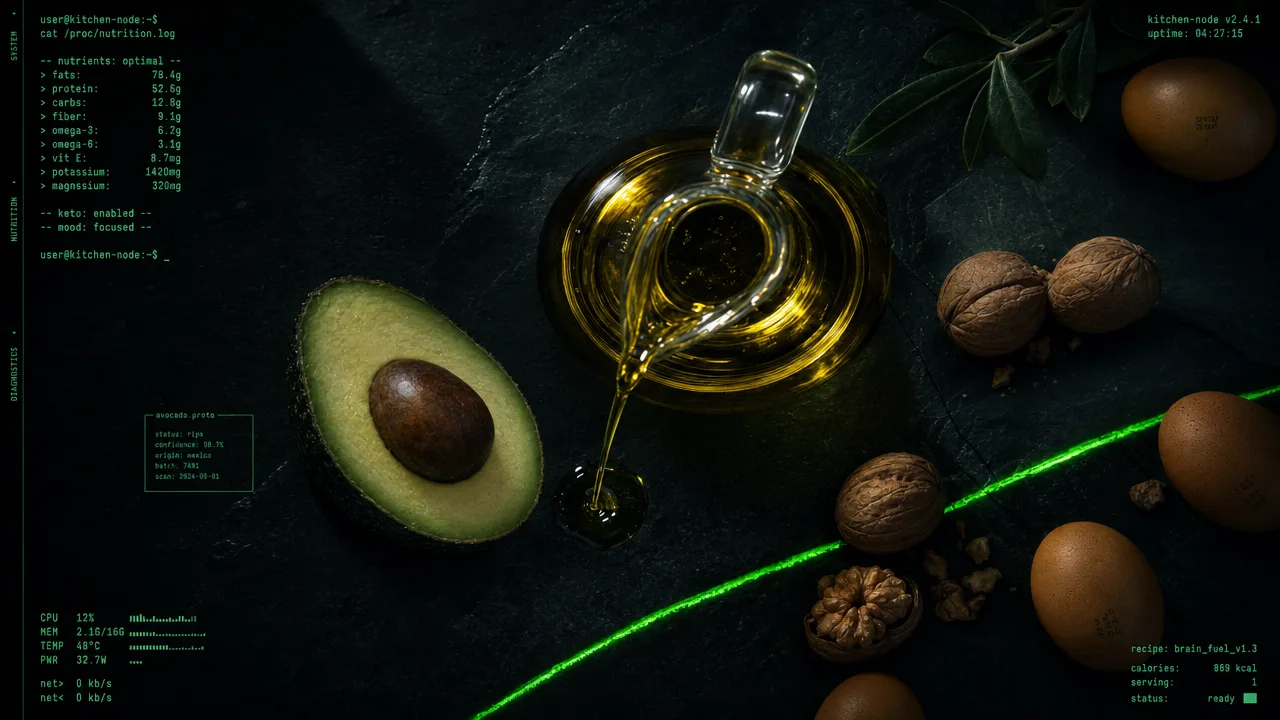
For a solid decade, fat was the villain. "Fat makes you fat" was on every cereal box, and a lot of people took it literally — cutting oil, nuts, egg yolks, and full-fat everything down to almost nothing. Then they wonder why they're cold all the time, why their hair is thinning, why their mood cratered, and why they're weirdly hungrier than when they ate more.
Fat isn't the enemy. Eating too little of it is its own problem. Here's the practical version.
The number, in one sentence
Aim for at least 0.5–0.8 grams of fat per kilogram of body weight per day — for most people that's somewhere between 40 and 70 grams. Below about 0.4 g/kg for any length of time and things start to go wrong.
In calorie terms, most guidelines put fat at 20–35% of your total intake. On a 2,000-calorie day, 25% is about 55 grams. You don't need to hit a precise target — you need a floor you don't drop below.
Why too little backfires
Fat isn't just fuel. It does jobs nothing else can.
- It runs your hormones. Your body makes hormones — including the ones that regulate metabolism, appetite, and, for many people, libido and menstrual cycles — from fat and cholesterol. Chronically low fat is one of the fastest ways to throw those off.
- It unlocks vitamins. Vitamins A, D, E, and K are fat-soluble. Eat a salad with zero fat and you absorb a fraction of the nutrients in it. A drizzle of olive oil isn't indulgence — it's what makes the vegetables count.
- It keeps you satisfied. Fat is slow to digest, so meals with some fat in them keep you full longer. Strip it all out and you're hungry again in an hour, which makes a deficit far harder to stick to.
- It affects your skin, hair, and mood. Dry skin, brittle hair, and feeling flat or irritable are all classic signs someone has cut fat too aggressively.
But it is calorie-dense — so be deliberate
Here's the catch that started the whole "fat is bad" myth: fat has 9 calories per gram, more than double protein or carbs at 4. It's not that fat is uniquely fattening — it's that it's easy to overeat without noticing, because a small amount carries a lot of energy.
That's why the move isn't "eat no fat" or "eat all the fat." It's eat enough, on purpose, and watch the pours. A tablespoon of olive oil is 120 calories. A handful of nuts can be 200. These are good foods — but they're the ones where "eyeballing it" quietly blows your budget.
How to hit it without overshooting
- Keep the whole-food fats, control the added ones. Eggs, fish, avocado, nuts, and olive oil are worth their calories. It's the invisible restaurant oil and the second and third glugs from the bottle that add up unlogged.
- Measure oil for a week. Just once, actually pour a tablespoon and look at it. Most people cook with two or three times what they'd guess. You don't have to measure forever — just recalibrate your eye.
- Don't fear the yolk or the skin-on salmon. Fattier protein sources are fine and often more satisfying. Budget for them instead of banning them.
- Spread it across the day. A little fat at each meal keeps you fuller than saving it all for one, and helps you absorb the nutrients in each meal.
What to log
Log your meals as usual and glance at your fat total once or twice a week. If you're regularly under about 40 grams, add a whole egg, half an avocado, or a real serving of nuts — you'll feel the difference in satiety and mood within days. If you're well over your calories and it's mostly fat, the fix is almost always the oil you cooked in, not the food itself.
The goal isn't low-fat or high-fat. It's enough fat to keep your body running well, logged honestly enough that it fits inside your deficit.