 Excaloricate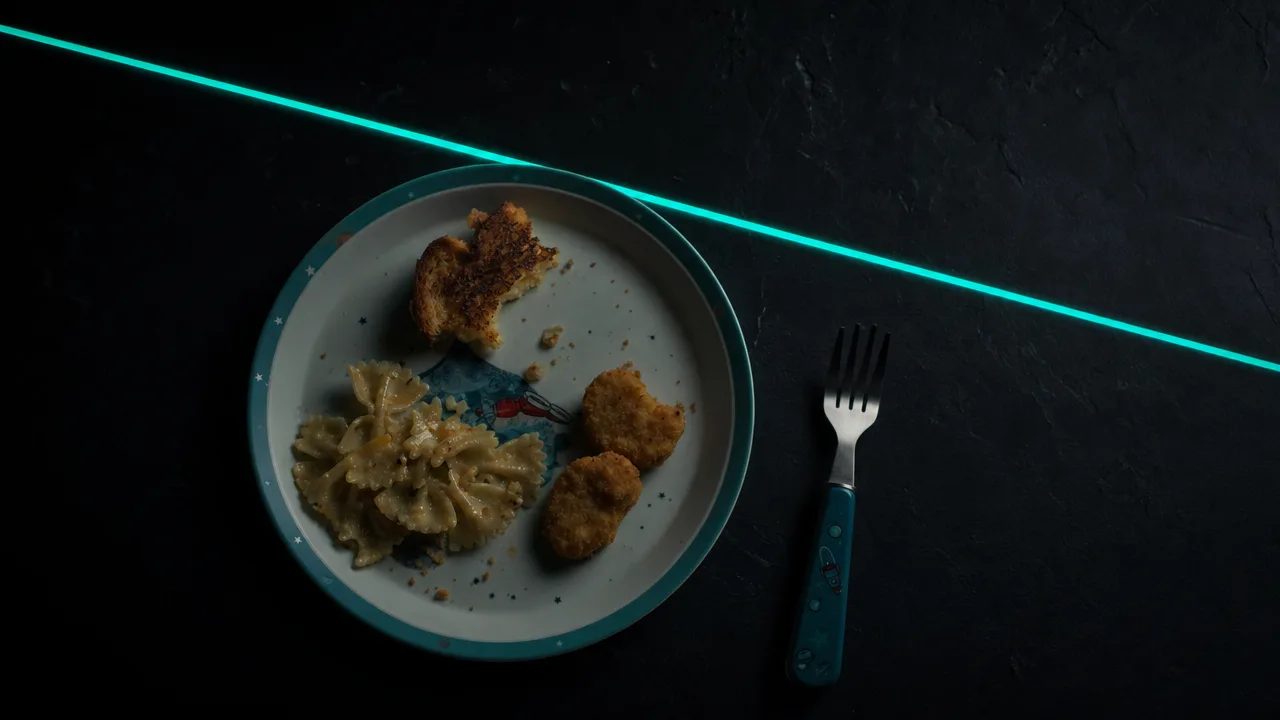
Kofi had a two-year-old and a theory about why his jeans had stopped fitting. Not enough sleep, too little time for the gym, the general chaos of a house with a toddler in it. All true. But none of it was the real reason, and it took him a while to see the thing that was happening at every single meal.
The plate that was never really finished
Toddlers do not eat like adults. They take two bites, decide they are done, and leave a plate of food that is objectively still good. Kofi could not stand to throw it away. Half a grilled cheese, the crusts of a peanut butter sandwich, three chicken nuggets, a fistful of pasta with butter. He would clear the little plate straight into his mouth on the way to the sink. It felt like the opposite of overeating — it felt like not wasting.
He never counted it because it never felt like his food. It was leftovers. It was cleanup. It was a reflex, done standing up, usually while wrangling a cup or wiping a table.
Small bites, big total
Here is the part that surprised him once he actually looked. A child's rejected meal is small, but it is calorie-dense in exactly the wrong way: buttered pasta, cheese, fried nuggets, the last third of a smoothie. Three or four times a day, every day, those "just cleaning up" bites added up to a real second lunch. Not a snack — a meal, eaten in fragments, invisible because it never sat on a plate of his own.
He was also eating his actual meals on top of it. The math was not mysterious once the hidden meal came into view.
Naming it out loud
Kofi started using Excaloricate mostly out of curiosity — could describing this stuff really capture it? So he did. "Half a grilled cheese and some buttered pasta my kid didn't finish." "Three nuggets." "The rest of a banana smoothie." Ten seconds, one-handed, while the toddler watched cartoons.
Seeing it written down changed something. The leftovers were no longer a moral act of thrift; they were the single biggest surplus in his day, and they had a number attached. Suddenly "finishing his plate" felt less like virtue and more like a decision he could make on purpose.
What actually changed
Kofi did not become the parent who scrapes everything into the bin — that was never going to be him. What he did was smaller and more sustainable. He started serving his son slightly less, so there was less to rescue. He put the genuinely uneaten bits in a container for the fridge instead of into himself. And when he did graze, he logged it, so it counted like any other food.
The scale started moving within a few weeks, and the jeans stopped being a daily negotiation. Nothing about his life as a dad got easier. He had simply stopped eating a second lunch he never knew he was ordering.