 Excaloricate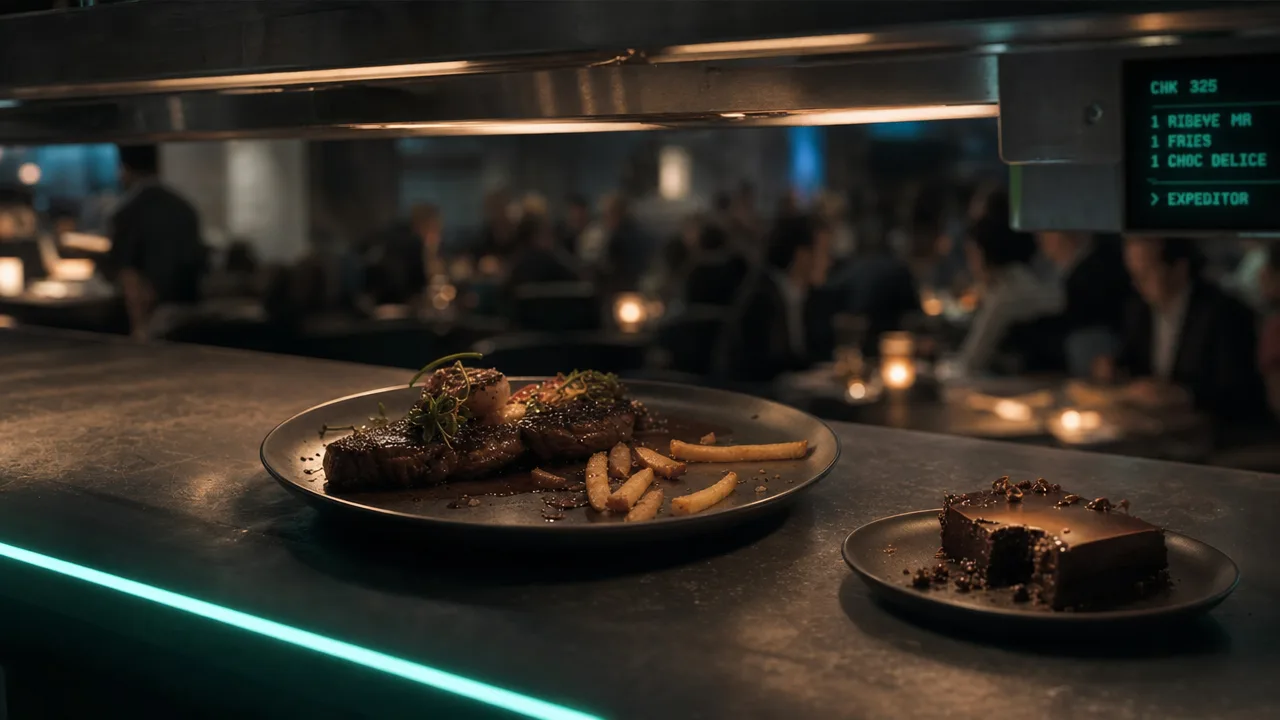
Yara had waited tables for six years. She knew the rhythm of a busy floor better than she knew her own kitchen at home — the pre-shift family meal, the lull at four, the dinner rush, the slow crawl to close. What she didn't know was where the extra ten pounds had come from. She rarely sat down to eat. She was on her feet for eight hours straight. If anything, she figured, the job should keep her lean.
The meal she never called a meal
Ask Yara what she ate at work and she'd say "nothing, really." No lunch, no dinner — just coffee, water, and the occasional handful of something on the way past the pass. But that handful happened a lot.
Three fries off a plate coming back to the kitchen. The corner of a dessert a table sent back untouched. A warm roll from the bread station. A taste of the new special the chef wanted feedback on. A few bites of the free staff meal she "didn't have time" to sit down and finish. Each one was too small to notice. Together, across a nine-hour shift, they were a second dinner.
Why grazing hides
A plated meal has edges. You sit, you eat, it ends, and some part of your brain files it under "I ate." Grazing has no edges. Food eaten standing up, mid-sentence, on the way to table twelve never gets filed at all. Yara wasn't lying when she said she ate nothing — she genuinely had no memory of it, because none of it felt like eating.
That is the trap of food that happens around work instead of at a table. The dinner you plan is the easiest to account for. The dozen bites you take without breaking stride are the ones that quietly decide the week.
Naming it, one bite at a time
Yara started using Excaloricate for the most practical reason: she was never near a scale or a label, and she had maybe fifteen seconds between tables. What she could do was describe. "Handful of fries." "Half a slice of chocolate cake." "Two bread rolls with butter." "Small bowl of the staff pasta." Fifteen seconds by the pass, and the bite had a number instead of vanishing.
The first week was a shock — not because any single item was large, but because there were so many of them. The grazing added up to more than the sit-down dinner she ate at midnight. Her "I basically don't eat at work" was off by roughly a full meal, every single shift.
What she changed
Not much, and that was the point. Yara didn't quit tasting the specials or skip the staff meal. She just stopped pretending the bites were free. She sat down for the family meal and ate a real portion of it, so she wasn't ravenously grazing three hours later. She let herself have the dessert corner and logged it. Seeing the bites, instead of denying them, was enough to take the edge off the ones that didn't matter.
The floor never got slower. Her shifts were exactly as long and as busy. She had simply stopped eating a whole extra meal she couldn't remember eating.